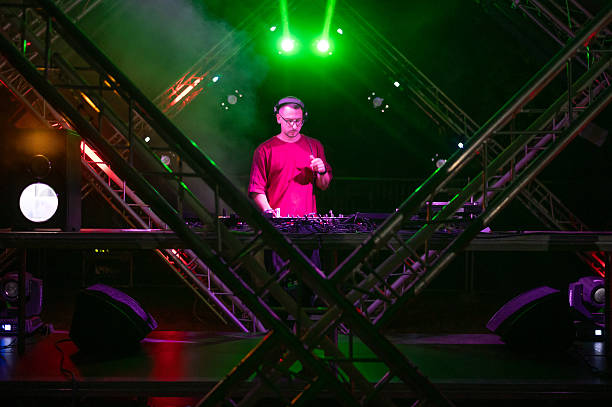
When you start DJing, the music is only half the language. The other half is the weird shorthand people throw around once a gig gets booked. A “gig” is any paid or unpaid DJ slot, from your friend’s basement birthday to a festival main stage. But once you’re on the lineup, the terms get specific fast. Knowing them keeps you from showing up at the wrong time, playing the wrong vibe, or accidentally annoying the promoter who books your next three shows.
The first thing you’ll hear is “slot.“ Your slot is your assigned time to play. It comes with a set time, a set length, and a vibe. A “warm-up” slot is early, usually when the room is half-empty and people are still nursing one drink. Your job isn’t to melt faces; it’s to build a mood so the next DJ can go harder. A “peak-time” slot is prime hours, when the floor is packed and everyone wants the biggest tunes. A “headliner” is the DJ whose name sold the tickets, usually playing peak or late. The “closer” plays after the headliner, often until lights up, and has to read the room when everyone is sweaty, emotional, and maybe not ready to go home. “Open-to-close” means one DJ plays the whole night, no openers, no closers, just a marathon.
Then there’s “B2B,“ short for back-to-back. It doesn’t mean two DJs hate each other and play simultaneously from opposite corners. It means two or more DJs share the decks, trading tracks and feeding off each other. A good B2B feels like a conversation; a bad one feels like two people talking over each other. “B3B” and “B4B” exist too, but they’re chaos in the best or worst way depending on the crew.
“Residency” is another big one. A residency is a recurring gig at the same club, bar, or night. It’s steady money, a built-in crowd, and a chance to develop a sound. A “one-off” is exactly what it sounds like: a single date, no commitment. A “guest spot” is when you’re invited to play someone else’s night. A “private event” could be a wedding, corporate party, or birthday where the vibe is less underground club and more “please play something everyone knows.“ A “rave” or “warehouse party” usually means an unlicensed or semi-legal space, loud rigs, and a very specific crowd. An “afterparty” happens after the main event, often when the sun is coming up and everyone’s judgment is gone.
Money and logistics have their own lingo. A “guarantee” is the fixed fee you get no matter what. A “door deal” means you get a cut of ticket sales, which is a gamble. A “rider” is your list of backstage needs, from water and towels to specific gear. Keep it reasonable or promoters will side-eye you. “Soundcheck” is when you test the system before doors open. “Load-in” is when you carry your gear in. “Curfew” is the hard stop, and “changeover” is the time between sets when one DJ packs up and the next sets up. If you blow past changeover, you’re eating into someone else’s slot.
The booth is the DJ’s workspace, and the green room is where artists chill before or after. “Backline” means gear provided by the venue, like CDJs, a mixer, or monitors. If the venue has a “house setup,“ you might only need USB drives and headphones. If not, you’re hauling your own controller or turntables. “Cut-off” is when the sound system gets shut off, usually by law or annoyed neighbors.
The real flex isn’t knowing every term. It’s understanding the etiquette behind them. Don’t play the headliner’s biggest tracks during your warm-up. Don’t ask for a B2B if you haven’t practiced. Don’t treat a residency like a one-off and ghost the crowd. Event and gig terms are basically a map of respect. Learn them, use them, and you’ll look like you’ve been in the game way longer than you have.