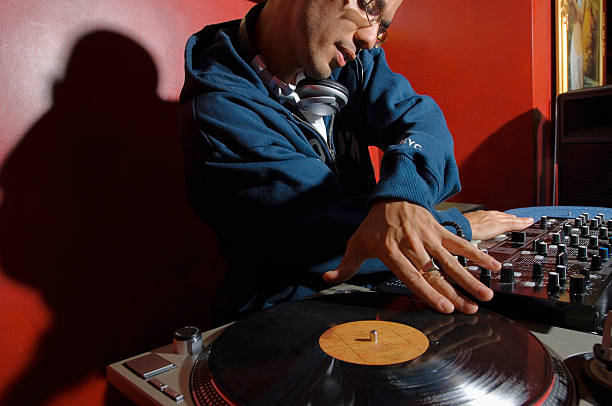
Remember when you’d walk into a club and the vibe was locked in from the first kick drum? Techno all night. House all night. Maybe a little drum and bass if you were feeling rowdy. That era is officially on life support. The death of genre purity isn’t just a trend—it’s the most exciting thing to happen to DJing since someone figured out you could loop a beat with two turntables. And for the bedroom producer economy, this shift is a massive green light.
Here’s the thing: the old guard built beautiful temples. Larry Levan at the Paradise Garage? Pure house and disco, with a spiritual devotion to the groove. Frankie Knuckles and Wendy Hunt? They sculpted dance floors with intention, genre as a sacred container. But today’s DJs are building amusement parks. They’re taking you from a 140bpm footwork track to a slowed-down R&B vocal chop, then through a jungle breakbeat, then into a hardstyle kick that makes your chest rattle. It’s not chaos—it’s curation. And it’s rewriting the rulebook.
The death of genre purity isn’t about disrespecting history. It’s about understanding that the audience’s brain has evolved. We’ve been swimming in algorithmic playlists, TikTok sound snippets, and hyper-specific Spotify blends for years. Nobody under thirty thinks of music in neat little bins marked “house” or “techno” anymore. They think in vibes, in energy curves, in emotional arcs. The DJ’s job is no longer to represent a genre—it’s to represent a mood. And moods don’t care about BPM boundaries.
This is where the bedroom producer economy comes in. If you’re producing tracks in your dorm room or your tiny apartment, you have an insane advantage. You don’t have a label breathing down your neck telling you to fit into a box. You can sample a ’70s soul record, layer it with a 2024 hyperpop synth, and call it a night. That hybrid sound is exactly what modern DJs crave. They aren’t looking for perfectly polished house tracks—they want weird, transitional, genre-fluid material that lets them bend a set into something no one’s heard before. The most sought-after records in a crate digger’s bag right now are the ones that sound like they were made by an alien who just discovered human emotions.
Of course, this shift demands a new technical skillset. You can’t just beatmatch two tracks of the same genre and call it a day. The future belongs to DJs who can read a room’s energy and pivot like a fighter pilot. You need to know how to drop a half-time switch without losing the floor. You need to understand phrasing across different time signatures. You need to be comfortable with chaos—because when you take a crowd from a dusty ambient intro into a 160bpm juke track, the transitions better be butter. Software like Serato and Rekordbox now have key-shift and pitch-altering tools that let you warp any song into any context. The DJ’s brain is the only limit.
And let’s talk about the culture side. The bucket-list clubs from Berlin’s Berghain to New York’s Nowadays to Tokyo’s Contact are all evolving their programming. Nights that used to be strictly one genre now embrace open formats, back-to-back sets where each DJ pulls from a completely different crate. The best festivals—like Dekmantel, Movement, and Primavera Sound—are booking acts that defy easy labeling. The audience rewards risk. They remember the night you dropped a Fleetwood Mac remix into a 4x4 techno set because it worked. They don’t care about purity. They care about moments.
So if you’re a bedroom producer or a bedroom DJ feeling the pressure to refine your sound into a neat little genre, I’m here to tell you: stop. Lean into the mess. Your laptop is a sandbox. Your headphones are a time machine. The history of this craft—from Larry Levan’s effortless flow to Frankie Knuckles’ gospel-tinged highs—was never about following rules. It was about feeling. The death of genre purity is really the rebirth of creative freedom. And in the bedroom producer economy, that’s the only currency that matters.