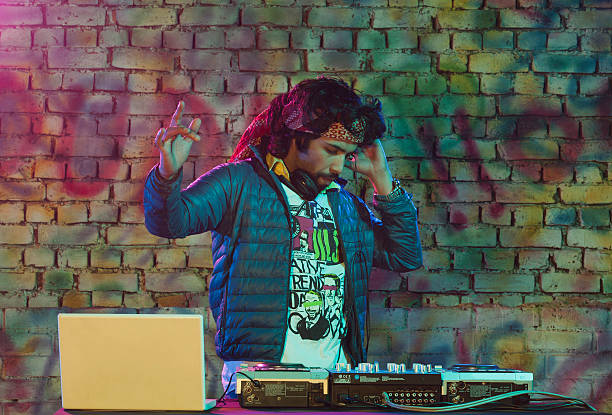
Picture this: you walk into a warehouse in Brooklyn or Berlin, and the DJ isn’t hunched over a laptop or even touching turntables. Instead, they’re standing in the middle of the floor, arms tracing glowing arcs in the air, their every gesture shaping a bassline that rattles your ribs. Their body is the controller. Their dance moves are the mix. This isn’t sci-fi or a TikTok fever dream—this is real-time motion capture dancing, and it’s quietly becoming the most radical shift in DJ culture since the sync button.
For decades, being a DJ meant mastering the tactile relationship between hands and hardware. Vinyl, CDJs, controllers—you name it, there was a physical object you had to touch to make magic happen. But real-time mocap technology, increasingly accessible through tools like Rokoko suits, Xsens, or even webcam-based tracking via software like TouchDesigner and Ableton Live, is flipping that script. Instead of twisting knobs, you’re throwing your shoulders back to trigger a filter sweep. Instead of tapping pads, you’re stomping your foot to drop a kick drum. The dance floor becomes the mixing board, and the DJ’s body becomes a human synth.
This is huge for the vibe. Think about the disconnect that’s always existed between a DJ and a crowd. The DJ is up there, often behind a booth, head down, cueing tracks. The dancers are out there, moving, sweating, feeling. Motion capture dancing collapses that distance. When a DJ physically leans into a build-up, arching their back like they’re about to dive into the crowd, and the track actually responds with a crescendo, the room feels it on a primal level. It’s not just performance art—it’s a feedback loop where the DJ’s emotional and physical state directly colors the music. You’re not just hearing a transition; you’re seeing the DJ earn it with their whole body.
And here’s where it gets wild for the future of DJing in the context of virtual reality clubbing. Once you combine real-time mocap with a VR headset, the DJ isn’t even in the same zip code as the party. They could be in their bedroom in Ohio, while a thousand avatars dance around a digital recreation of Berghain. But because the DJ’s movements are captured and mapped to their avatar—every head bob, every finger snap, every dramatic spin—you still get that human spark. A static, pre-recorded set in VR is just a playlist with visuals. A live mocap-driven set in VR is a genuine, shared experience. It brings the sweat and stumble and spontaneity back to a place that can feel sterile.
This technology is also lowering the bar for entry in a weird way. While a beginner DJ might spend months learning beatmatching by ear, motion capture systems can be programmed to interpret broad gestures as key commands. Wave your arm left to move the crossfader, raise your hand to increase the volume, and the software handles the complex math. Does that take away the “craft”? Some old-school heads will absolutely argue that. But it also opens the door for dancers, performance artists, and musicians who have incredible musical intuition but zero interest in BPM grids. The craft becomes choreography. The mix becomes a conversation between the body and the algorithm.
Of course, there are growing pains. Latency is the enemy—nothing kills a drop faster than a half-second delay between your jump and the bass hitting. The gear can be clunky; nobody wants to sweat through a $3,000 mocap suit during a three-hour set. And let’s be real, the idea of a DJ flailing around with a headset on looks a little silly right now. But the same was said about early hip-hop DJs cutting between two copies of the same record. This is just a new kind of scratch.
For the health-conscious traveling DJ, this shift is also a blessing. Sitting hunched over turntables for years wrecked shoulders, wrists, and spines. Motion capture dancing forces you to move, to stretch, to actually work your core. It turns a gig into a full-body workout. The DJs who adapt won’t just have better sets; they might have longer careers.
The dance floor is always hungry for something real. In a world where algorithms curate our playlists and streaming eats the mystique of a rare track, the one thing we can’t fake is live presence. Real-time motion capture dancing lets DJs give that presence a new language—one that speaks directly through movement. So whether you’re in a physical club, a VR rave under a digital moon, or somewhere in between, remember this: the future of DJing doesn’t have to be quieter. It just has to move differently.