If you’ve ever stood behind a pair of turntables, felt that electric moment when two records lock into a perfect loop, or watched a crowd lose their minds when the drop hits, you owe a certain debt to a Jamaican-born teenager named Clive Campbell. You probably know him better as DJ Kool Herc, and on August 11, 1973, inside the rec room of 1520 Sedgwick Avenue in the Bronx, he didn’t just throw a party. He accidentally invented the blueprint for hip-hop DJ culture. That single night, born from a small back-to-school jam his sister Cindy organized for five bucks a head, laid the concrete foundation for everything we now call DJing, from beatmatching to the art of the break.
To really understand the weight of the Sedgwick Avenue Break, you have to picture the scene. The Bronx in the early seventies was rough. Block parties were survival—they were safe spaces where people could actually feel joy. Herc had already been studying his father’s sound system back in Kingston, watching how Jamaican selectors would “toast” over instrumental sections of records. But Herc noticed something else. When he played funk records like James Brown’s “Give It Up or Turnit a Loose” or “The Mexican” by Babe Ruth, the crowd didn’t go crazy during the vocals. They went crazy during the breakdowns—the moments where the drums hit hard, the bass got funky, and the energy peaked. In those short few seconds, the dance floor turned into a riot of B-boys and rockers moving like their lives depended on it.
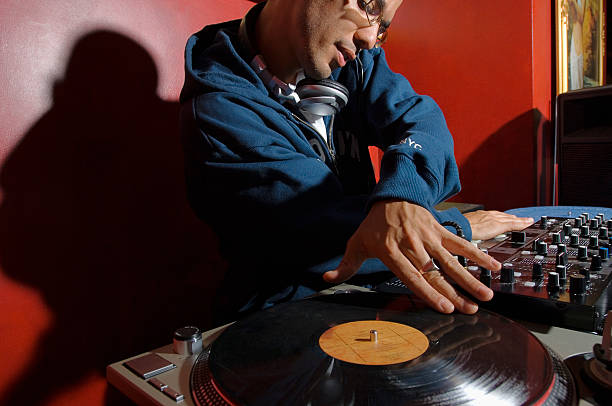
The problem? Those breakdowns lasted maybe fifteen seconds. Then the vocals would come back, and the energy would crash like a wave pulling back from shore. So Herc did something ridiculously simple but revolutionary. He grabbed two copies of the same record. When the first break ended, he cupped the needle into his hand—no slipmats, no pitch faders, just raw vinyl and instinct—and dropped the second record right on the same drum pattern. The break didn’t stop. It kept going. And going. And going. He called it the “Merry-Go-Round,” and for the first time in history, a DJ created an extended loop by physically manipulating two turntables.
This wasn’t just a technical move. It was a social and cultural earthquake. By isolating the instrumental break, Herc gave birth to the dance style we now call breakdancing. B-boys and b-girls had room to hit freezes, power moves, and footwork because the beat didn’t vanish. It also birthed the role of the MC. Herc’s friend Coke La Rock grabbed the mic to hype up the crowd over those extended breaks, saying things like “Yo, this is Kool Herc in your area, rockin’ you with a sound so clear.” That wasn’t rapping yet, but it was the seed of hip-hop vocals. And arguably most important for DJ evolution: Herc proved that the DJ wasn’t just a radio jockey playing songs. The DJ was a composer. A conductor. An architect of sound who could bend time using nothing but his hands, his ears, and two copies of the same vinyl.
For any aspiring DJ reading this, the Sedgwick Avenue Break holds a deep lesson. Herc didn’t have a mixer with a crossfader. He didn’t have BPM counters or sync buttons. He had a heavy-duty sound system called the Herculoids, raw manual dexterity, and an ear for what made people move. That’s it. The entire art of beat repetition, the loop, the breakdown—the very DNA of modern DJ culture—came from a teenager willing to break the rules because the rules didn’t serve the crowd. He didn’t care about correct playback. He cared about energy.
Today, when you punch in a loop on your Pioneer CDJ or tap a pad on your controller to trigger a four-bar break, you’re standing on the shoulders of that moment at 1520 Sedgwick. Grandmaster Flash, who was in the audience that night, took Herc’s idea and added the quick-mix theory, using headphones to cue the second record perfectly. Grand Wizard Theodore stumbled into scratching by accident because a turntable was still running while his mother yelled at him. Every technique that fills our modern sets—beat juggling, chopping, flips—traces a direct line back to that August party in a cramped rec room.
The building at 1520 Sedgwick Avenue is now a historic landmark, recognized by the National Trust for Historic Preservation. The truth is, the landmark isn’t the brick and mortar. It’s the idea that a DJ can create something new from the raw materials of sound. If you’re serious about the craft, take a moment to respect that. Your next party, your next set, your next perfect transition that makes the whole room hold their breath—it all starts with a teenager who just wanted to make the drums last a little longer.